ECHL Players Put Into 'Impossible Spot' As Player-Strike Looms
AHL
Consider signing up for a subscription so we can continue to bring you exclusive first-reports, prospect features and stories from around the American Hockey League (AHL).
Quick. Easy. Support original journalism!
Written by: Tony Androckitis
@TonyAndrock on Twitter/X
As players in the ECHL are set to go on strike on Friday, the uncertainty of what the future holds for hockey players playing in that league from the United States, Canada and across the globe has left many with an uneasy feeling and added stress at a time of the year that should be spent at home with family celebrating the joy and love the holiday season brings at Christmas.
"Most guys are in a weird spot now with having to cancel flights back from holiday break, but we all feel it is worth it for the longevity of us players and the league," an ECHL player told InsideAHLHockey.com Tuesday. "A consistent message around the locker rooms and between players is we can't believe it has taken this long for the league to be pushed back on."
ECHL players will go on strike beginning on December 26th as collective bargaining negotiations between the Professional Hockey Players Association (PHPA) and the ECHL over the past year have produced little to no movement on a number of hot-button issues, with PHPA Executive Director Brian Ramsay and former player and ECHL Executive Committee member Jimmy Mazza holding a media conference call late Monday afternoon to provide an update on where things stand.
"This is a league that would rather bully us than bargain," Ramsay told media Monday, noting that the PHPA has filed several grievances with the National Labor Relations Board alleging unfair bargaining practices - including the ECHL contacting the players directly with CBA proposals as well as threatening to remove players from their housing and revoke their work-visas should they go on strike Friday.
While the PHPA had entered into a media blackout during CBA negotiations with both the ECHL and the American Hockey League (AHL), it's clear that things have gotten particularly sour between the PHPA and ECHL given Ramsay's continued pointed comments Monday afternoon via a zoom call with media.
“This is a league that has taken almost a year to concede that we should be entitled to choose helmets that properly fit us and are safe. This is a league that still supplies our members with used equipment. This is a league that shows no concern for players’ travels and, in fact, has said that the nine-hour bus trip home should be considered your day off."
ECHL Player Contracts, Salaries & Insurance
Let's set things straight right off the bat.
ECHL players aren't wealthy on the scale of professional sports athletes pay across the hockey landscape and sports at large. They're far from it.
We're talking about rookie max deals equating to $15,766 for first year players in the league.
According to a source with direct knowledge, there are roughly only 20 players league-wide that have an ECHL contract eclipsing $30,000 this season.
"We aren't asking to make $100,000 per year," one ECHL player told InsideAHLHockey.com, stating the PHPA remains committed to its members in the ECHL in hopes of obtaining a new collective bargaining agreement that will allow ECHL players to be paid a fair wage "so we can live in the summer, use professional grade equipment and be at ease of mind knowing we have insurance."
One thing worth noting is that ECHL players don't have guaranteed contracts, which means the threat of teams using that fact against players deciding to strike Friday has only increased tensions.
Another major issue is health insurance for ECHL players, who lose their insurance at the end of each season and sends players scrambling in the summer for healthcare.
"That is why we are fighting for year round insurance coverage as you should get in a professional hockey league," one ECHL player told InsideAHLHockey.com
Used Equipment?
Another point of contention that has been revealed is that some ECHL teams are allegedly supplying their players with used hockey equipment and hockey helmets that don't properly fit most ECHL players.
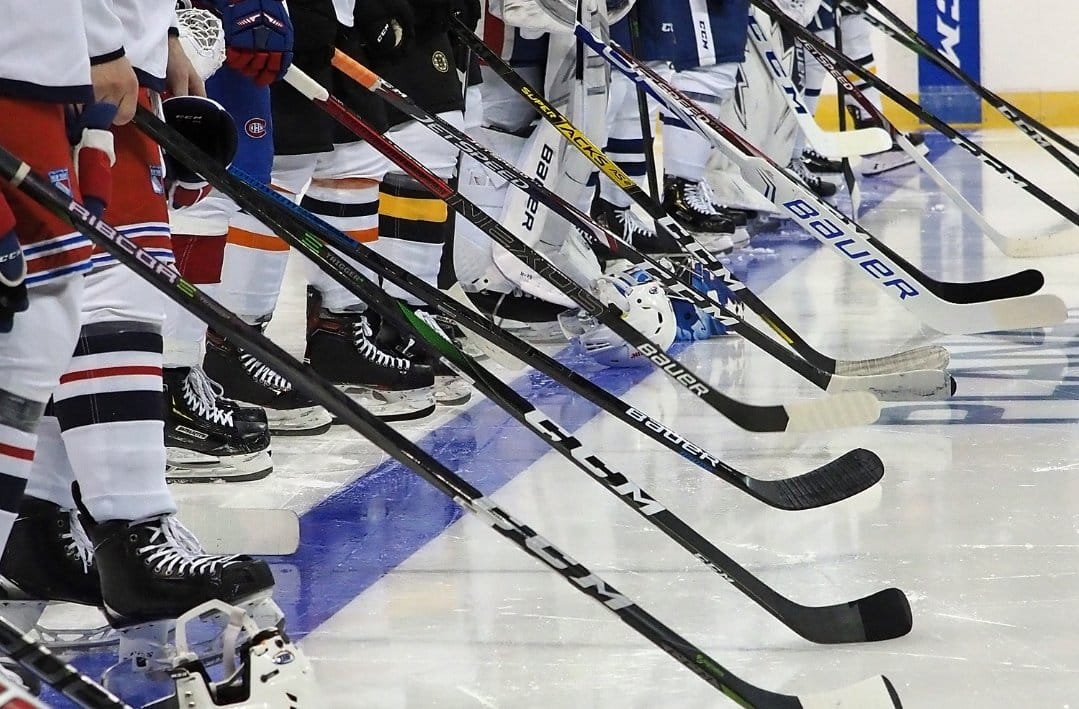
The ECHL has an extensive partnership with Warrior Hockey, which the league uses as its sole provider for all hockey equipment - including helmets and sticks.
"The issue with helmets is that Warrior doesn't make a good helmet and it fits a very select few players," one ECHL player told InsideAHLHockey.com.
It's a culture shock for players arriving to the ECHL, a majority of which come from the NCAA and junior hockey in Canada where players are supplied new equipment yearly and whenever needed.
"The main message between guys is we can't believe we don't get proper sticks, have to use the used gloves and helmets," one player told InsideAHLHockey.com. "We could go to a lot of 4th-tier leagues in Europe and get custom sticks, but can't get them with a league affiliated with the NHL."
ECHL Players 'Put Into An Impossible Spot'
With the player-strike looming, ECHL players are left in an unenviable position.
The membership's vote on initiating the option to strike, while overwhelmingly in favor, certainly wasn't a unanimous decision amongst players across 29 teams in North America.
The decision between standing in unison with the PHPA and risking both current and future employment opportunities, or going across the picket line and continuing to play is certainly weighing heavy on the minds of the players.
"If we strike, we’re kicked out of our apartments the next day & they’re calling up players from the SPHL. If we don’t strike as one, we look like selfish assholes to the rest of the league," one ECHL player told InsideAHLHockey.com.
"It's an absolute disaster."
Is It Time For The NHL To Step In - And Step Up?
In talking with players there are never any shortage of ideas/solutions when it comes to anything, but here is one idea from an ECHL player I think is worth sharing:
It's time for the NHL to step in and invest in a legitimate two-tier development league model with the ECHL being that second tier below the American Hockey League (AHL).
With the ECHL set to expand to 32 teams to match with the 32 NHL and 32 AHL teams, what better time than now to improve minor league hockey as the stepping stones to the NHL.
As the player explained to InsideAHLHockey.com, it would be similar to what Major League Baseball (MLB) does with its 'AA' affiliate teams - which is two league's removed from the MLB similar what the ECHL is to the NHL.
The NHL subsidizing ECHL teams - even $500,000-$1 million per team - would go a long way toward easing the financial burden felt by both players and ECHL ownership groups.
The subsidies, like the MLB's for its AA teams, would help cover costs related to player development (training equipment, medical care & insurance), housing and travel-related expenses.
"The MLB is a perfect example of how it would work," the player said. "If teams are invested in the development of their players in the system, they would be welcome to contributing more to their affiliates."
Consider signing up for a subscription so we can continue to bring you exclusive first-reports, prospect features and stories from around the American Hockey League (AHL) and ECHL.
Three different ways to sign up today. Quick. Easy. Support original journalism!
Patreon: http://www.patreon.com/InsideAHLHockey
PayPal: $3/month -> http://paypal.me/TonyAndrock
Venmo: $3/month -> InsideAHLHockey
FULL DETAILS -> http://www.insideahlhockey.com/subscribe